Select date

Hispanics and Asians Join the White Political Mainstream, by Ron Unz


 Contrary to widespread expectations, Republican gains in last week’s midterm elections were absolutely minimal, nothing at all like the “red wave” that so many had predicted.
The GOP seems to have picked up enough Congressional seats to achieve a very narrow majority in the House, but the Democrats actually extended their control in the Senate, with the final results awaiting a January run-off in Georgia. A new president’s first midterm elections have usually shown a huge swing to the other party, with the Republicans gaining 54 seats in 1994 and 63 in 2010, while the Democrats picked up 42 in 2018. But despite the highest inflation in four decades and up to 75% of the country saying America was “on the wrong track,” the Republicans will be lucky to win even ten additional seats, representing the worst midterm results for a party out of power in two decades. This quickly led Donald Trump’s bitter neoconservative opponents to blame him for the debacle.
But although the overall outcome of the election was hardly good news for the Republicans, relatively little attention has been paid to one major bright spot, a development that was even more important for the national future of our country. The demographic results provided strong evidence that America’s rapidly-growing populations of Hispanics and Asians were continuing their political convergence with the existing white majority.
Taken together those two groups already represent a quarter of our total population, roughly double what they had been thirty years earlier, and according to reasonable projections they may account for one-third of all Americans within another generation. In recent decades, they have voted overwhelmingly for the Democrats, and the likely impact of their increasing numbers had become a linchpin of the confidence of party leaders in their long-term prospects. But although those groups do still lean strongly in that direction, over the last half-dozen years, their margins have sharply declined, a trend that initially shocked much of the media given that it seemed so contrary to their narrative of a “white supremacist” takeover of the Republican Party by Trump and his right-wing, MAGA supporters.
Political analyst William Galston is a staunch Democrat based at the Brookings Institution, and writing in the Wall Street Journal on election night, he summarized some of those alarming trends:
Democrats have even more cause for worry about their standing among Hispanics, who gave Donald Trump 38% of their votes in 2020, up from 28% in 2016, while Joe Biden’s share was only 59%, down from Hillary Clinton’s 66% in 2016. Recent surveys suggest this slide is continuing. AEI reported that Hispanic support for Democratic congressional candidates averaged only 53% in October. A Wall Street Journal survey conducted in late October 2022 offered even worse news, with Hispanic support for Democratic congressional candidates averaging 46%, only 5 points ahead of their Republican counterparts.
The actual results were released the following day by two different consortia of major news and research organizations, and these were considerably better for the Democrats, but still confirmed the very substantial gains the Republicans had made since the previous midterms:
In House contests, 11 percent of voters indicated they were Hispanic. In both polls, they voted 60 percent for Democrats, 39 percent for GOP ones. In 2018, nearly seven in ten Hispanics voted for Democrats. Democrats also appear to have lost significant ground among Asian voters. In 2018, around 80 percent of them supported Democrats. In this election, it was around 60 percent.
Obviously, well over half of Hispanics and Asians still voted for the Democratic candidates in 2022, but changes in ethnic party loyalties are usually glacial, and so rapid a shift is really quite remarkable.
A few days prior to the election, the Atlantic had published a lengthy article discussing these same Hispanic trends.
- Why Democrats Are Losing Hispanic Voters
The left has alienated America’s fastest-growing group of voters just when they were supposed to give the party a foolproof majority
Tim Alberta • The Atlantic • November 3, 2022 • 8,100 Words
Prominent political demographer Ruy Teixeira has long been associated with the Democratic Party and twenty years ago, he had co-authored The Emerging Democratic Majority with John Judis, a widely discussed book arguing that long-term population trends were likely to ensure the party’s political success. But in his latest Atlantic article, he now argued that the Democrats were continuing to lose working-class voters, greatly damaging their prospects. Given that Hispanics are heavily concentrated in that economic category, both these developments were obviously related.
Although this pair of long Atlantic articles provided an excellent description of these trends, I think they necessarily shied away from one of the most important political factors responsible, which instead was unexpectedly emphasized by a different academic.
Prof. Michael Hudson is an influential Left economist with deep Marxian roots who ranks as one of the leading critics of the neoliberal policies that dominate today’s Democratic Party, and just before the vote he published a long interview addressing those economic matters. But I was shocked at the extreme bitterness of his closing remarks, which focused on the violent ethnic tensions that he believed were now pushing Asians and Hispanics out of the Democratic Party.
DLJ: Economies are interdependent. I.e., it would still be a question of the Chinese working class and the American working class building bonds across nations.
MH: The Democratic Party has produced such an anti-Asian, hate-filled racism, that I don’t think that can be. The Democratic Party has done everything it could to spur an ethnic war between the black and Asian populations. You see that here in New York by the attacks on the subways, on the street, mainly by blacks against Asians. The Democratic Party, by pushing this ethnic identity, has pushed ethnic hatred. That’s why the Democrats are surprised that the Hispanics and Asians are moving towards the Republicans. The Hispanics and Asians realize that the Democrats have a race-hatred policy, much like the Nazis. I don’t believe that any political progress can be made in the U.S. until the Democratic Party, certainly the current leadership, is swept away. There cannot be any progress in America today led by the Democratic Party, which is today the ideologically Right-wing party that has turned what should be an economic problem into an ethnic and non-economic problem. It’s like the old industrial capitalist was supposed to have said, “if I can get half the working class fighting against the rest of the working class, then we have won.” That’s the Democratic Party. They asked, “how do we do it?” We divide the working class into ethnicities, ethnic identity, gender identity.
DLJ: You can have the working class cancel each other.
MH: Yes.

The year 2020 had seen saw the sudden massive explosion of the national Black Lives Matter movement and a huge subsequent rise in urban crime and disorder, including the largest increase in homicides since record-keeping began in 1960, while the bizarre response of many prominent Democrats was to call for “defunding the police.” During the late 1960s a previous wave of social unrest had driven many traditionally Democratic constituencies out of their party, and the pattern seemed to be repeating itself today. Although the exact motive of the reigning Democratic elites in stoking such intense racial resentment and violent conflict may be disputed, I think the political outcome has been obvious.
Soon after these racial upheavals began in 2020, I published a controversial essay entitled “The Political Bankruptcy of American White Racialism” in which I contrasted the ideological beliefs of that movement with the actual realities of American society:
During all of this time, a dystopian nightmare scenario dominated the fears of these individuals, involving the collapse of our stable middle-class society under a massive influx of non-white foreigners, a population impossible to assimilate and deeply hostile to our culture. Crime and social disorder would skyrocket and the cherished symbols of our national heritage would come under fierce attack. Once California and the rest of the Southwest became heavily Hispanic, a secessionist movement would naturally become a powerful political force, possibly seeking to reunite with Mexico.
This sort of apocalyptic vision was indicated by the title of one of the earliest works in the genre, The Path to National Suicide, published in 1990 by the late Lawrence Auster. Over the years, several bestsellers have been produced along roughly similar lines, including Peter Brimelow’s Alien Nation in 1995, Pat Buchanan’s Death of the West in 2001, and most recently Ann Coulter’s Adios America! in 2015. Even figures of the highest academic repute have sometimes voiced similar fears, with Harvard’s Samuel P. Huntington, one of America’s most eminent political scientists, publishing The Clash of Civilizations in 1996 and Who Are We? in 2004.
And whether we take our information from the pages of the New York Times articles or from informal smartphone videos, exactly these long-dreaded scenes of violent disorder and cultural upheaval have now appeared throughout much of our country. But the circumstances have been quite different than any of these writers had predicted.
Over the last few decades, America’s urban centers have been become overwhelmingly non-white and heavily immigrant, with residents of European ancestry these days reduced to less than 35% of the total. But within this national average, some cities are still largely white, and these have demonstrated an intriguing pattern.
Two of the American cities that have experienced the longest and most sustained urban chaos and anti-government disorder over the last couple of months have been Portland, Oregon and Seattle, Washington, and these are two of our cities that have remained the most overwhelmingly white, each in the range of 65-70%. The flashpoint of America’s racial convulsion was Minneapolis, and its city government has now voted to “defund” the local police department while nearly a quarter of its officers have already announced their plans to quit. Minneapolis is another major demographic outlier, still being 60% white.
Meanwhile, whites had already become a minority decades ago in my own state of California, and this shift has been especially strong in the larger cities, with white Europeans probably down to little more than 20% in Los Angeles and San Jose, while remaining perhaps 35% in San Diego and San Francisco. During my younger years, LA had been America’s most overwhelmingly white large city, and over the last half century it had also developed a reputation for especially deadly racial rioting, becoming notorious for the Watts Riots of 1965 and the Rodney King Riots of 1992. But the disorders this time were very mild by comparison, and almost entirely limited to Westside looting by the local black population, now reduced to less than 10% of the total. Unrest in other California cities has been even more minimal in recent weeks, nothing at all like what has wracked so many other American urban centers.
The article provoked a great deal of discussion across the Internet and drew nearly 250,000 words of comments. I argued that the urban racial upheavals convulsing America not only demonstrated the obvious failure of white racialism as a political movement, but also completely destroyed the theoretical framework that its leading proponents had spent decades constructing. Contrary to all their expectations, there was an obvious inverse relationship across our urban centers between the very heavy presence of non-white immigrants and social disorder.
Individuals are likely to reject any evidence that their deep ideological beliefs might be mistaken, and many of the commenters reacted with extreme hostility to my message. But I think that the more thoughtful members of their camp understood that facts must be accepted rather than ignored, and began wondering whether I might not be correct.
Indeed, my article had originally been prompted by several notes I had received and quoted from a former longtime racial activist who acknowledged that events had proven that I’d been right all along. American Renaissance has been one of our most prominent white racialist organizations for more than three decades, and to its considerable credit it republished my entire essay on its own website.
Some of these social patterns would have been much more widely recognized if our disingenuous media had not so effectively concealed the Hispanic background of the vilified individuals at the center of some of the homicide trials that became notorious ideological flashpoints.

Kyle Rittenhouse. Credit: Gage Skidmore
Although George Floyd had been a violent, lifelong criminal and drug-dealer, the 2020 Black Lives Matter movement and its media facilitators elevated him to secular martyrdom on an unprecedented global scale. But the same racial upheavals soon gave Americans on the opposite side of the ideological divide a young folk hero of their own in 17-year-old Kyle Rittenhouse, who killed two antifa attackers during the Kenosha riots and was eventually acquitted by a Wisconsin jury on grounds of self-defense.
For more than a year prior to that verdict, the teenager had been massively vilified as a racist, “white supremacist” murderer by biased media accounts, while simultaneously being lionized as a national hero by right-wingers, including strongly racialist ones. Yet despite his Anglo-Saxon name, Rittenhouse may have had substantial Hispanic ancestry, having been so described in a police report, and this certainly seems plausible given his appearance. So our dishonest national media never acknowledged the likelihood that its youthful “white supremacist” poster-villain might have actually been classified as non-white by the American government.

George Zimmerman
And Rittenhouse was neither the first such example nor even the most prominent. America’s recent cycle of racial convulsions had begun a decade ago when Trayvon Martin was killed by George Zimmerman, who was also later acquitted by a Florida jury on grounds of self-defense. Once again, despite his Germanic name, Zimmerman was actually half-Hispanic, with his mother’s Ecuadorian ancestry probably even providing him with a touch of Africa. Another non-white had been heavily demonized as a “white supremacist” by the media.

Jorge Ramos
Unlike other categories, the Hispanic label is entirely cultural and ancestral rather than racial, and surveys show that the community ranks Univision’s Jorge Ramos as its most influential public figure, although his fair skin and blue eyes suggest his purest Castilian ancestry. Some other very prominent Hispanic figures in politics or entertainment fall into a similar category.
This same situation also applies to less mainstream segments of the ideological spectrum. After Richard Spencer’s downfall and occlusion, one of his most prominent Far Right successors has been 24-year-old Nick Fuentes, regularly described in the media as a leading “white supremacist” though he would obviously be classified as a minority by the US government.
The recent widespread racial violence had certainly played a large role in shifting the political alignment of Asians and Hispanics and some of the contributing factors are hardly mysterious. In an article published a few weeks before the 2016 elections, I had argued that much of the social unrest had been provoked by the extremely skewed and dishonest coverage of racially-charged crimes by our major media organs:
Just a couple of weeks ago it was discovered that an attractive white teenage girl had been kidnapped by a group of black men in South Carolina, held captive and gang-raped for days, then finally killed and discarded, with her body fed to alligators. I found no mention of this grotesque tale in any of my major national newspapers, even as The New York Times reported that Hollywood was in the planning stages of three different major movies about the infamous Emmett Till murder case from 60 years ago. By hiding certain events and heavily emphasizing others, our media apparatus can create any desired picture of the world, and until recently almost none of us would have been the wiser.
The Black Lives Matter movement has increasingly dominated our political discourse for the last couple of years, and its protests have led to major shifts in policing policy, with some critics claiming that these changes have been responsible for a large, unexpected spike in urban homicides in some heavily black cities. But as near as I can tell, many of the major incidents sparking that movement were more or less complete media hoaxes, and quickly revealed as such to anyone who even casually consulted the unfiltered information available on the Internet, thereby avoiding the dishonest MSM gatekeepers.
For example, Trayvon Martin seems to have been a violent young thug and his antagonist, George Zimmerman, a half-Hispanic Dudley-Do-Right, whose main offense was attempting to defend himself while at risk of being beaten to death after he was attacked late at night without provocation in his own community. Similarly, Michael Brown of Ferguson fame was a gigantic, thuggish criminal, who casually committed the strong-arm robbery of a convenience store at night, then suddenly attacked the local police officer who attempted to stop and question him soon afterward.
These and many of the other BLM incidents would hardly seem likely to inspire mass public outrage, whether among blacks or anyone else, except that our dishonest media successfully transformed them into things they were not, thereby agitating the ignorant and the gullible, with prominent media pundits sometimes themselves stunned at the total avoidance of the true facts. I have little doubt that during the 1930s Soviet Pravda managed to instill boiling outrage among ordinary Russians when it fabricated all the monstrous crimes and horrific treacheries purportedly committed by the Trotskyite wreckers and other political deviationists.
The negative reaction to crime and social disorder is hardly the only area of apparent commonality between racially-oriented whites and many non-whites. Since the 1960s Affirmative Action programs favoring minorities in admissions and employment have drawn intense hostility from white racialists and conservatives in general, and the anger they provoked played an important role in shifting many whites into the Republican Party. But during the half-century of their existence, these policies had survived numerous legal and political assaults and seemed to have become an immutable part of the American social landscape.
However, just a couple of weeks ago, the Supreme Court began hearing oral arguments on a legal challenge to Harvard University’s admissions policies by a collection of Asian plaintiffs, and all indications are that race preferences in college admissions may soon be struck down, with a distinct possibility that a much broader ruling might invalidate all related programs. If this occurs, a lawsuit spearheaded by Asians will have achieved one of the most cherished objectives of white activists for the last two generations.
Moreover, the central role played by those Asian participants seems entirely organic rather than representing the sort of “racial figleaf” strategy frequently employed by manipulative political strategists or media consultants. This had been demonstrated by the surprising outcome of an earlier California referendum on that same topic, which indicated that many ordinary Hispanics also shared those same views.

By 2019 the white European fraction of California’s population had declined to probably less than one-third of the total. Given those demographic changes, the state’s dominant, overwhelmingly liberal Democratic establishment decided to finally repeal Prop. 209, the state’s 1996 legal ban on Affirmative Action, one of the last surviving legacies of its once powerful Republican Party, now reduced to total irrelevance. Their proposed ballot measure, Prop. 16, easily attracted super-majorities in both houses of the state legislature, along with an enormous tidal wave of endorsements and political donations. For many years, Democrats had won all statewide races by 20-30 points, with their Republican opponents sometimes even lacking a candidate on the November ballot. The reigning Democratic Party establishment was almost unanimous in its support of the ballot measure, which seemed an unstoppable political freight-train in the minds of both supporters and opponents, and white conservatives resigned themselves to yet another political setback.
Yet once the first polls came out, they showed the measure going down to defeat, drawing little support from Hispanics and the solid opposition of Asians, with the latter eventually contributing the bulk of the meager budget for the No campaign. All these predictions were confirmed on Election Day, and restoring racial preferences lost by nearly 15 points, a margin considerably wider than the original results had been in the far whiter and more Republican California of a quarter-century earlier.
Since the late 1990s, leading Republicans and conservatives had mostly made their peace with Affirmative Action, and have often even promoted such programs under a different name, taking positions that regularly outraged their grassroots activists. So California’s overwhelmingly Democratic Hispanic and Asian voters had demonstrated that they actually stood to the right of America’s Republican politicians on that important issue, a result that must surely have intrigued the more thoughtful white racialists. And the off-year elections of 2021 reinforced that pattern, especially the governor’s race in Virginia, home to American Renaissance and many of its leading White Nationalist writers.
Although traditionally known as the seat of the Old Confederacy, the state had been trending Democratic for the previous couple of decades and Joe Biden had carried it by more than a 10 point margin in 2020, leading many conservatives to write it off as permanently lost. But Republican Glenn Youngkin unexpectedly won his 2021 race, defeating former governor Terry McAuliffe, a heavyweight national Democrat, and he did so based upon cultural issues such as banning “Critical Race Theory” from the public schools. This provided an important ray of hope to the national GOP, faced with Joe Biden in the White House and Democrats in control of both the House and the Senate.
Moreover, according to the Associated Press VoteCast exit poll, Youngkin carried 55% of the Hispanic vote, a remarkable achievement. Although the small 5-6% size of the Hispanic electorate made reliable surveys difficult and other estimates were far lower, these numbers did get notice, especially since the biggest swings to the Republicans in the New Jersey gubernatorial election held that same day had been in heavily Hispanic areas.
Over the previous couple of years, Virginia conservatives and traditionalists had endured an unrelenting wave of attacks on their heritage, with Confederate monuments defaced or removed, sometimes with the backing of prominent Republicans. Many of our Founding Fathers such as Washington, Jefferson, and Madison had been Virginia slave-owners, and their constant vilification suggested that they too would eventually face the same historical chopping block, a possibility long dreaded by AmRen and its supporters.
According to the 2020 Census, Virginia’s once overwhelming white majority had dropped to around 61% and was likely to soon disappear, a prospect of tremendous concern to local white racialists. But black numbers had mostly been stagnant, with the entire increase coming from Hispanics and Asians. So if those groups were not nearly as hostile to white interests as had long been assumed, perhaps reasonable political accommodations might be possible.
A major change in belief must sometimes quietly simmer for a while before some event brings it to the fore. America’s urban racial upheavals and my related article had appeared in the summer of 2020, but I first began noticing some apparent ideological reconsiderations in November and December of the following year, shortly after the Virginia election. AmRen has long been closely associated with VDare, which has spent more than two decades primarily focused upon the threat of non-white immigration. Now suddenly both these publications began seriously discussing whether Hispanics might be realigning themselves with the Republicans—generally regarded as America’s “white party”—while also suggesting political strategies to accelerate that process. Two major VDare articles explored this important issue, as did a couple of hour-long AmRen podcasts by its founder and his staffers, along with various news articles the latter had excerpted and linked on their website. Occidental Dissent, a smaller White Nationalist blogsite, also ran numerous items on this same topic.
This political reassessment by leading white racial activists should not be exaggerated, and their writings correctly noted that the white majority vote still dwarfed any possible contribution from Hispanics and Asians, who together had been less than 15% of last week’s electorate. But this shift in their positioning on the issue still carried profound ideological and political implications.
The future importance of America’s rapidly-growing immigrant population had long been apparent to Republicans, and GOP leaders have been heavily promoting Hispanic political outreach for at least a quarter-century, with President George W. Bush, Karl Rove, and the late Sen. John S. McCain being the most prominent public advocates. But through all those years and decades, VDare, AmRen, and similar white racialist organizations had ferociously attacked and ridiculed those sorts of proposals, which they denounced as the height of establishment idiocy and betrayal. Indeed, this longstanding disagreement over Hispanics probably represented one of their sharpest points of disagreement with their mainstream conservative antagonists. But now, they themselves were suddenly saying much the same thing, a truly remarkable reversal, even if they obviously refused to advertise it as such.
I actually suspect that such a political rapprochement between white racialists and such non-white groups as Hispanics and Asians would be much less fraught with difficulty than might be expected.
ORDER IT NOW
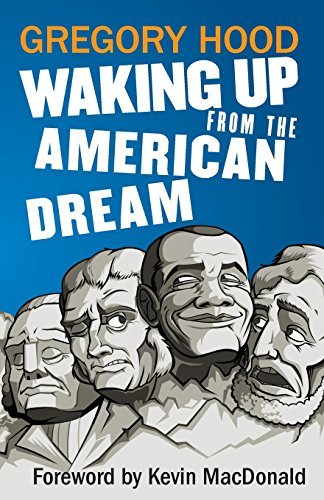
Consider the interesting example of Gregory Hood, a leading White Nationalist of the younger generation, who works as a top staffer at American Renaissance while frequently writing under different pen names for kindred publications such as VDare. A few years ago, he published his collection Waking Up from the American Dream, and its introductory essay was his personal account of how and why he had joined such a vilified and marginalized movement, a piece that he had separately published in 2015.
Hood explained that he came from a moderate and very mainstream family background in which radical white separatism would have been seen as anathema if it could even have been imagined. His ideological transformation had been due to his personal experiences at a liberal arts college, where he had encountered an atmosphere of extreme “political correctness,” including widespread racial bullying by black students and organizations, and his resulting reaction had left him a committed White Nationalist.
I found his account quite credible and interesting, but in a comment I noted certain aspects of his story that perhaps he himself might not have fully recognized:
I got the impression that the author grew up on the East Coast and probably went to college there as well. Therefore, it doesn’t surprise me that all the groups that so enraged and offended him were black-activist types. I noticed that he didn’t even seem to say anything about Asians or Hispanics, who together probably outnumber blacks 2-to-1 nationwide, at least among the more youthful age cohorts.
I live in California, where blacks are 6% of the population and Asians+ Hispanics 55%, and I’ve never heard anything like this about the behavior of those latter groups. I strongly suspect that’s a big part of the reason that there seems to be almost zero White Nationalist sentiment in California, despite whites now having become a shrinking minority of the population over just the last generation or two…
What I’m about to say may sound extremely odd, but I’ve long suspected that “White Nationalism” itself is almost a PC-type sublimation of other sentiments. When black-activists constantly denounce or harangue you, and you feel their group unfairly benefits from Affirmative Action, you naturally become increasingly hostile towards them. But the notion of being “anti-black” has become so deeply stigmatized under modern cultural indoctrination, that the individuals instead prefer to think of themselves as “pro-white.” Meanwhile, immigrant groups relatively free from media brainwashing are sometimes much more candid in their sentiments.
Although a single election result can easily be dismissed as an outlier, several in a row have now revealed a new American political landscape that must be recognized. According to the exit polls, white voters favored Republican candidates by a 60-40 margin, while Hispanics and Asians leaned in the opposite 40-60 direction, certainly a clear difference but hardly an unbridgeable ideological chasm.
And even these figures may considerably exaggerate the influence of ethnicity in such voting patterns. Although Texas is solidly Republican and Florida is evenly divided, the bulk of Hispanics and Asians live in heavily Democratic states such as California, New York, Illinois, and New Jersey. Moreover, both these groups are considerably younger than whites, and youthful voters skewed very heavily Democratic. So their overall voting patterns may not have differed so greatly from whites of the same age and region.
The increasing political amalgamation of these non-white populations with the existing white majority is a development of enormous consequence for our country’s future. If these trends continue, the voting behavior of members of these rapidly-growing groups will become much less determined by their ethnic ancestry than by the same set of factors that influence the choices of their white counterparts, not only the aforementioned impact of age and geography, but also characteristics such as education, affluence, occupation, and religiosity. And if this occurs, then from a political perspective Hispanics and Asians would become little different than Americans of Irish or Italian heritage.

A Championship Season in Mariachi Country
These days, the New York Times is relentlessly focused upon stark racial differences, yet one of the longest pieces it recently ran having a Hispanic theme was a nearly 10,000 word Sunday Magazine article on the fierce high school mariachi competitions of South Texas, the sort of benign ethnic human interest story that might have easily been published in the strongly assimilationist 1950s.
As discussed above, these dramatic electoral shifts of the last half-dozen years were probably triggered by the severe political mistakes of the Democratic Party and the ideologues who control its policies. But they also probably required the increasing assimilation of Hispanics and Asians into mainstream American society, a process that has followed the same historical trajectory of previous immigrant groups. And I believe that this assimilation process would have been far more difficult or even impossible without a major change in public policy that began in the late 1990s, one in which I played an important role.

Earlier this year, I published a comprehensive retrospective article marking the twenty-five year anniversary of the “English Wars” that I had launched in 1997, a successful national effort to dismantle the existing system of Spanish-almost-only “bilingual education” that for decades had dominated the instruction of many millions of young immigrant students in our public schools. As a direct consequence of those successful campaigns, the vast majority of immigrant schoolchildren have subsequently been taught English as soon as they started school, just as had been the case for all previous immigrant groups.
As the next generation of Hispanic and Asian schoolchildren quickly became fully fluent in English, often with little trace of any accent, an enormous potential barrier to their full social assimilation was completely eliminated, with the resulting consequences that we are now seeing.
The notion of teaching young children English when they start school seems so totally obvious and uncontroversial that the years of difficult effort required to establish that sensible policy have almost completely vanished from public memory. But without the educational changes that began in 1997, I think that today’s electoral shifts would have been much less likely to occur.
The closing section of my “English” review article discussed the political impact of America’s ongoing ethnic transformation, and I think last week’s voting results have strongly affirmed my analysis.
In late 2020 I published a lengthy survey on the intellectual history of American white racialism and one section discussed The Dispossessed Majority, a seminal text written a half-century ago by Wilmot Robertson, which revived that ideological movement after its post-World War II eclipse.
Despite the passage of several decades, I argued that Robertson’s general framework seemed surprisingly relevant in today’s America, but required certain important redefinitions of his “Majority” category, with that crucial transformation having been facilitated by the successful outcome of the English Wars.
Running some 200,000 words, Robertson’s opus soon became the ur-text of modern American White Nationalism, reestablishing the ideological basis for a movement once anchored in the writings of men such as Lothrop Stoddard but which had largely disappeared in the aftermath of World War II.
From its earliest days, America had been run by its Anglo-Saxon core along with the assimilated descendents of closely-related Northern European immigrant groups, who together constituted both the bulk of the population and a large majority of its ruling elites. But Robertson argued that during the previous generation or two, a quiet revolution had steadily shifted political and social control into the hands of America’s tiny Jewish minority, thereby transforming the country’s huge white Gentile population into “the dispossessed majority” of his title, even as the heavily Jewish media ensured that very few members of that group had recognized this ongoing transformation.
Throughout the 1950s and 1960s, the central fault line in American society had almost invariably been that separating black from white, with few scholars exploring any residual conflicts between different white ethnic groups. Large scale European immigration had been halted in 1924, and it was widely believed that decades of action by America’s powerful melting-pot had mostly eliminated the sharp differences between the various flavors of whites, a perception strongly encouraged by the media of that era. In fact, I suspect that one reason Beyond the Melting Pot by Nathan Glazer and Daniel Patrick Moynihan had attracted so much attention and became such a sociological classic in 1963 was that it focused on a subject otherwise so little-discussed and one that went against the prevailing ideas of the period.
By contrast, The Dispossessed Majority marked an ideological return to the early decades of the twentieth century, when intra-white conflict along ethnic lines had been the central issue. Indeed, Robertson reverted to the old-fashioned separation of Europeans into the Nordic, Alpine, and Mediterranean sub-races, a usage long since fallen into disrepute and popular disuse. Although blacks, Asians, and other non-white groups were given some attention, his primary focus was on differences between American whites.
In particular, the author sharply distinguished between “assimiliable” and “non-assimiliable” white minorities. By his reckoning, America’s so-called “Majority” population—the Old Stock Anglo-Saxons and other fully assimilated Northern European ethnic groups—constituted just under 60% of our total population. An additional 12% fell into the category of “assimilable white minorities,” including the Irish, Poles, and French Canadians. But another 8% of the population consisted of white ethnicities he considered sufficiently alien as to be classified as “non-assimilable,” including Jews, Southern Italians, and Greeks, which was quite an intellectually scandalous position to take in the early 1970s.
A book first published in 1972 is now nearly a half-century old, and must be evaluated in that light, so its numerous references to the threat of Communism and the Soviet Union are obviously quite dated. But taken as a whole, I think the text holds up very well, probably remaining more relevant to the domestic problems of our own present-day American society than all but a sliver of the works published around the same time. Indeed, although I had found it quite interesting a decade ago, the events of the last few years—and especially the last few months—seem to have enormously increased its contemporary relevance. Robertson—whose real name was Humphrey Ireland—died in 2005 at the age of 90, but I think he would have found our current domestic problems an almost straight-line extrapolation of those that he had first laid out several decades ago.
Most remarkably, I think an updated version of his central ethnographic framework might be a useful means of analyzing the fault-lines in today’s American society. Although Robertson might not necessarily have agreed, I believe that the last two generations have succeeded in fully merging virtually all of America’s white Gentile ethnic groups—whether “assimilable” or “non-assimilable”—into what he had defined as the Majority population, with few if any sharp distinctions remaining. So by that standard, today’s Majority is almost exactly the same fraction of our national population as the somewhat different Majority that he had defined fifty years ago.
And I would argue that an even more profound change has been that the bulk of America’s non-whites—most Hispanic and Asian groups—have now clearly shifted into Robertson’s category of “assimilable minorities,” or perhaps in many cases have already even become fully-assimilated members of our Majority population. Such major revisions obviously do violence to the ideological beliefs of an author who was born more than a century ago, but I think they much better reflect the realities of today’s American society than do his sharp distinctions between Europeans of Nordic and Alpine racial ancestry.
Perhaps to some extent my sociological analysis is a selfish one. Throughout world history differences of language have been among the sharpest barriers separating ethnic groups, so I believe that my own success two decades ago in dismantling the widespread system of Spanish-almost-only “bilingual education” in California and elsewhere throughout the count