Select date

TIMELINE: 75 Years of Israel’s human rights abuses against Palestinians


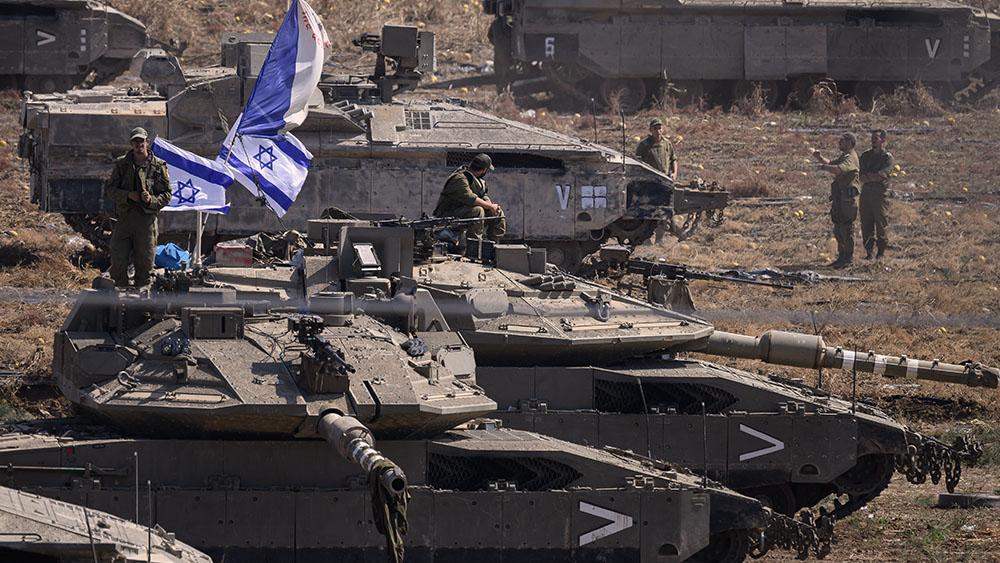
The following timeline was assembled by Natural News researchers in an effort to document the undeniable fact that the Oct. 7th attack on Israel by Hamas "did not occur in a vacuum" as the UN Secretary General correctly stated.
For the record, we absolutely condemn the Hamas attacks on Israel a despicable display of violence against civilians. At the same time, it is no exaggeration to describe Gaza as a "concentration camp" run by Israel, meaning what occurred on Oct. 7th was more of a "prison break" than nation-on-nation violence, especially given that neither the United Nations nor Israel recognizes Palestine as a nation itself. When Israel says it "has a right to self-defense," that is true when you are talking about being attacked by other nations. The situation is far different, however, when Israel is the occupying force, having displaced millions of Palestinians and forced them into a tightly-controlled concentration camp known as the Gaza Strip, over which Israel exerts near-total police state control.
Oct. 7th was not the beginning of history between Israel and Palestine. In fact, it was the culmination of generations of extreme racism, violence, ethnic cleansing and genocidal actions carried out against the Palestinian people by Israel. Here's a summary timeline of that history. Each entry is credited to the appropriate source, and most of the links here refer to Amnesty International published documents.
Dec. 11, 1948 – UN Addresses Palestinian Displacement
Over the course of the Arab-Israeli war, at least 700,000 Palestinian refugees flee their homes in an exodus known to Palestinians as the Nakba, or catastrophe. Israel wins the war, retaining the territory provided to it by the United Nations and capturing some of the areas designated for the Palestinian state. Israel gains control of West Jerusalem, Egypt gains the Gaza Strip, and Jordan gains the West Bank and East Jerusalem, including the Old City and its historic Jewish quarter.
In 1948, the UN General Assembly (UNGA) passes Resolution 194, which calls for the repatriation of Palestinian refugees. Palestinians will later point to Resolution 194 as having established a “right of return” for Palestinian refugees and their descendants. The specific parameters of this return are debated in the decades that follow, including among the large number of descendants from the 1948 refugees and the three hundred thousand Palestinians who will flee their homes during the June 1967 war.
June 5, 1967 – The Six-Day War
Israel and several of its Arab neighbors fight the Six-Day War. Israel wins a decisive victory: it suffers seven hundred casualties; its adversaries suffer nearly twenty thousand. Israel emerges with control of the West Bank and the Gaza Strip—areas inhabited primarily by Palestinians—as well as all of East Jerusalem. Israel also takes control of Syria’s Golan Heights and the Sinai Peninsula, which is part of Egypt. Israel will stay in the Sinai Peninsula until April 1982.
Dec. 1, 1987 – First Palestinian Intifada
An Israeli driver kills four Palestinians in a car accident that sparks the first Palestinian intifada, or uprising, against Israeli occupation in the West Bank and Gaza. The image of Palestinians throwing rocks at Israeli tanks becomes the enduring image of the intifada. Over the next six years, roughly 200 Israelis and 1,300 Palestinians are killed.
A Palestinian cleric named Sheikh Ahmed Yassin establishes the militant group Hamas as an offshoot of the Muslim Brotherhood. Hamas endorses jihad as a way to regain territory for Muslims; the United States designates Hamas a foreign terrorist organization in 1997.
Dec. 21, 1992 – Over 400 deported Palestinians fear for their safety
Amnesty International (AI) expressed serious concern about over 400 Palestinians deported from Israel and the Occupied Territories, who were currently stranded in an area between the “security” zone controlled by Israel with the South Lebanon Army and the rest of Lebanon. The Israeli authorities suspect most of the detainees of being members of Hamas, the Islamic Resistance Movement.
Hamas has claimed responsibility for the killing of an Israeli border Policeman whom it had abducted. AI condemned the killing of Senior Sgt. Nissim Toledano, but also called on the Israeli authorities not to retaliate for this killing by summarily deporting hundreds of Palestinians.
Feb. 1, 1994 – Oral statement to the UNCHR on the Israeli Occupied Territories
This oral statement summarizes AI’s human rights concerns in the Israeli Occupied Territories. AI drew attention to the detention of some 10,000 Palestinians on security grounds, including up to 140 who are held in administrative detention and urged the Israeli Government promptly to review their situation. Over 200 detainees are held in the Khiam detention center in south Lebanon outside any legal framework and without access to relatives or the ICRC.
At least 20 Lebanese nationals taken prisoner in Lebanon between 1986 and 1989 appear to be held to use in exchanges for missing Israeli soldiers and South Lebanon Army members, who are possibly being held to obtain the release of detainees from Israel or Khiam. AI is concerned about shootings of Palestinians, including children, by Israeli security forces and by abuses committed by Palestinian armed groups.
Aug. 15, 1995 – Amnesty International calls for an end to torture and for medical examinations of past detainees
Members of the Ministerial Committee for the General Security Service held a meeting to decide whether to extend the exceptional dispensation for the use of increased physical pressure during the interrogation of suspected supporters or members of Hamas and Islamic Jihad. A "moderate" measure of physical and psychological pressure is permitted under the secret guidelines for interrogation used by the General Security Service.
Amnesty International believes that either the guidelines for interrogation permit the use of torture or ill-treatment of detainees, or that they are also frequently violated with impunity.
Palestinian detainees in Israel have been systematically subjected to methods of torture including hooding, shaking, beating, sleep deprivation while standing or sitting in painful positions and prolonged confinement in closet-sized cells.
Aug. 13, 1996 – “Under constant medical supervision”: Torture, ill-treatment and the health professionals in Israel and the Occupied Territories
This report examines the role of health professionals working with the Israeli General Security Service, the security branch most involved in the interrogation of Palestinian detainees. It gives case details of the role of health professionals in a system in which detainees are tortured, ill-treated and humiliated in ways which place current prison medical practice in conflict with medical ethics. Although there is no evidence of health professionals actively assisting in torture and ill-treatment, they act as silent witnesses.
Amnesty International believes that health professionals have a vital role in documenting and exposing human rights violations, and is calling on the government and the Israeli Medical Association to ensure that torture and ill-treatment are stopped.
Dec. 8, 1999 – Demolition and dispossession: The destruction of Palestinian homes
This report investigates the pretexts and implications of the Israeli policy of house demolitions, focusing particularly on the period after the beginning of the peace process in 1993. It describes the problems for Palestinians of getting permits and the related Israeli policies on land including zoning, land confiscations and Israeli settlement-building of the occupied territories.
May 3, 2001 – House Destruction – Palestinian civilians
In the past month Israel has intensified its policy of destroying Palestinian homes, apparently as a collective punishment for attacks on Israeli forces. Hundreds of people have been made homeless and had their possessions destroyed. The demolitions are set to continue
Oct. 22, 2001 – Amnesty International urges Israel to stop attacks on Palestinian areas: News Flash
Amnesty International is gravely concerned at recent reports of random shelling and shootings by the Israeli Defence Force in Palestinian residential areas, among them Jenin, Ramallah, Tulkarm, Bethlehem and Beit Jala, which has left at least 25 Palestinians killed, among them several children, and scores of others injured, in retaliation for the killing of the Israeli Minister of Tourism, Rehavam Zeevi on Oct. 17.
The organization calls on the Israeli government to urgently abide by international human rights standards which state that law enforcement officers may not use firearms except in self-defense or defense of others against death or serious injury.
Amnesty International also calls on Palestinian groups not to fire at Israeli civilians and renews its call on the international community to take immediate steps to introduce international observers with a strong human rights component.
Nov. 23, 2001 – Committee Against Torture says Israel’s policy of closures and demolitions of Palestinian homes may amount to cruel, inhuman and degrading treatment
Amnesty International welcomed today the landmark conclusion by the Committee Against Torture stating that Israel's policy of closures and its demolitions of Palestinian homes "may, in certain instances, amount to cruel, inhuman or degrading treatment or punishment" in breach of Article 16 of the United Nations Convention against Torture and Other Cruel, Inhuman or Degrading Treatment or Punishment, which Israel ratified in 1991.
April 7, 2002 – Fear for Safety of Palestinians in Jenin Refugee Camp
The Israeli armed forces have reportedly killed scores of Palestinian civilians, and injured hundreds more, in a sustained assault on the Palestinian refugee camp in Jenin on the West Bank. Many more will die unless the Israeli forces stop the attack and withdraw immediately.
May 17, 2004 – House demolition: Palestinian civilians in Rafah refugee camp
The Israeli army has accelerated its demolition of houses in the Rafah refugee camp in the past few days, making over 1,000 people homeless. The army intends to demolish more houses in the camp.
Oct. 4, 2004 – Excessive use of force
Amnesty International is concerned about the deterioration of the human rights and humanitarian situation as a result of the Israeli army incursion in the Jabaliya refugee camp and surrounding areas in the northern Gaza Strip (including sectors in the nearby towns of Beit Hanoun and Beit Lahiya).
In the past week (since the evening of Tuesday, Sept. 28) more than 70 Palestinians have been killed, more than a third of whom were unarmed and including some 20 children. Hundreds of others have been injured.
The Israeli army has repeatedly used excessive force, including heavy shelling from tanks and helicopter gunships. Experience has shown that the use of such weapons and the manner in which they have been deployed by the army in densely populated residential areas (the Jabaliya refugee camp is one of the most densely populated places in the world, with more than 100,000 Palestinians living in less than two square kilometres), invariably results in a high rate of death and injury of bystanders and people who are not involved in armed confrontation. These tactics betray a lack of respect for fundamental human rights principles, including the right to life.
Aug. 17, 2005 – Amnesty International condemns killing of Palestinians by Israeli settler, calls for urgent measures to end settlers’ impunity
Four Palestinians were shot dead and two others were injured by an Israeli settler yesterday evening as they were returning home from their work at a factory in the Israeli settlement of Shilo, in the West Bank. The settler, a driver from the Israeli settlement of Shvut Rahel, was transporting Palestinians who work in a factory in the Shilo settlement to nearby Palestinian villages. He shot dead three Palestinian workers at the gate of the settlement and then went back to the industrial area, where he shot at other Palestinian workers, killing one of them and injuring two others.
Sept. 28, 2005 – House Demolition
The Israeli army is intending to destroy 41 homes in the small Palestinian village of Sawia, in the West Bank. Almost 250 people are at risk of being left destitute if the destruction goes ahead. In most of the West Bank, Palestinians must obtain a building permit from the Israeli army if they want to build on their own land, but it is almost impossible for them to obtain these permits.
March 14, 2006 – Palestinian prisoners at risk of being killed by Israeli forces
Amnesty International is deeply concerned about the safety of Palestinian detainees in Jericho Prison. The prison is currently surrounded by Israeli forces who have threatened to kill detainees who refuse to surrender to them.
The detainees most at risk are Ahmad Saadat, leader of the Palestinian Front for the Liberation of Palestine (PFLP), and four other Palestinians who have been detained at Jericho Prison since 2002 despite a court decision ordering their release. While detained under the jurisdiction of the Palestinian Authority (PA), Ahmad Saadat and his four co-detainees have been held under the supervision of guards provided by the UK and US in accordance with an agreement reached between these states and Israel and the PA. They, together with a sixth Palestinian detainee, Fuad Shubaki, wanted by Israel on charges of smuggling weapons, are the principal targets of today's Israeli military action and are particularly at risk of being killed by Israeli forces.
April 10, 2006 – Israel must halt attacks on Gaza residential areas – children killed
Amnesty International is calling on the Israeli army to end immediately its air bombardments and shelling of civilian residential areas in the Gaza Strip. At least two Palestinian children have been killed and tens of other civilian bystanders injured in recent days during the course of such attacks; at least 15 other Palestinians, most of them reported to be members of armed groups, were killed.
June 11, 2006 – Israel must end unlawful killings of Palestinians and stop reckless shelling
Amnesty International is calling on Israel to end immediately its reckless shelling and air strikes against the Gaza Strip, which have killed and injured scores of unarmed Palestinians, including several women and children, in recent months.In the latest such attack on the afternoon of June 9, 2006, seven members of the same Palestinian family were killed and ten of other civilians were injured when Israeli forces fired several artillery shells at a beach in the North of the Gaza Strip. The beach was crowded with Palestinian families enjoying the first week-end of the school holidays.
July 13, 2006 – Civilian population at risk in Gaza
Amnesty International today urged the Israeli government to immediately cease attacks against Palestinian civilians and civilian property and infrastructure, and to take action to address the growing humanitarian crisis in the Gaza Strip.
The organization condemned attacks such as those carried out by Israeli forces on the night of 11-12 July 2006, when an entire family – Nabil and Salwa Abu Salmiya and their seven children aged between seven and 17 – were killed when the Israeli Air Force targeted their home in a densely populated residential district in Jabaliya, north of Gaza City. More than 30 other residents were injured in the attack.
Nov. 8, 2006 – Amnesty International delegate visits scene of Gaza Strip killings
The killing of 18 civilians in the Palestinian town of Beit Hanoun, victims of Israeli shelling, was an appalling act, Amnesty International said today. The organization called for an immediate, independent investigation and for those responsible to be held accountable. It said previous Israeli investigations, such as that carried out into the killings of a Palestinian family on a beach in the Gaza Strip last June, had been seriously inadequate and failed to meet international standards for such investigations, which must be independent, impartial and thorough.
Those killed, most of whom were asleep in their beds when their homes were struck by shells fired by Israeli forces, included eight children. An Amnesty International delegate who visited the scene of the killings shortly after the attack was told that 15 of the victims were killed in the first strike and that three others were killed by a second shell as they raced to help the dead and injured.
March 21, 2007 – Right to family life denied: Foreign spouses of Palestinians barred
Tens of thousands of foreign nationals who are married to residents of the Palestinian territories occupied by Israel since 1967 are not allowed to live with their husband or wife by the Israeli authorities. Israel controls the borders of the Occupied Palestinian Territories and forbids foreign spouses from entering. The husbands and wives who are denied entry are not seeking admittance to Israel but simply want to live with their spouse in the West Bank or Gaza Strip.
April 27, 2007 – House Demolition/forced eviction
In April, the Israeli army served demolition orders on all the residents of the Palestinian Bedouin village of Hadidiya, in the Jordan Valley in the east of the occupied West Bank. The inhabitants of the village expect the tents and shacks where they live to be demolished any time. After previous demolitions they have pitched tents again in the village but now they face being forcibly removed from the land where they have lived for decades.
July 11, 2007 – Health Concern
Several thousand Palestinians are stranded in northern Egypt, unable to return to their homes in the Gaza Strip. The Rafah Crossing between Gaza and Egypt has been closed by the Israeli authorities since 9 June. Hundreds of those stranded are camped out close to the border crossing. Many have inadequate food, water and shelter although they are in the desert at the hottest time of the year. Their health and safety remain at risk while they continue to be prevented from crossing the border and returning home.
July 30, 2007 – Palestinian villagers’ homes under threat
The Israeli army is threatening to destroy their homes of Palestinian villagers in the Jordan Valley region of the West Bank. The villagers are facing increasing pressures as the army restricts their movement and their access to water.
Aug. 3, 2007 – Further information on house demolition / forced eviction
The Israeli army increased their pressure on the Palestinian villagers of Hadidiya and Humsa on 28 July by confiscating a tractor (one of only two in the village) and water tank from a villager living in Humsa, worsening the already dire water shortage in the village.
Aug. 14, 2007 – Further information on house demolition / forced eviction
Several homes were destroyed by the Israeli army on the morning of Aug. 13 in the Palestinian village of Humsa, in the Jordan Valley area of the Occupied West Bank. The destroyed properties were home to the families of Abdallah Hsein Bisharat (more than 30 people) and Ahmad Abdallah Bani Odeh (some 10 people).
Sept. 5, 2007 – Cutting vital supplies to Gaza would amount to collective punishment
Israeli government ministers are reported to have stated that they are considering cutting off water and electricity supplies to the Gaza Strip in response to the launching of home-made "qassam" rockets by Palestinian armed groups from Gaza into Israel.
Deputy Prime Minister Chaim Ramon told Israeli army radio: "We will set a price tag for every qassam, in terms of cutting off infrastructures... We will not continue to supply 'oxygen' in the form of electricity, fuel, and water while they are trying to murder our kids.
"Cutting off the supply of basic necessities such as water and electricity – which Gazans cannot obtain from elsewhere because of the blockades imposed by Israel – would constitute collective punishment of Gaza's population in violation international humanitarian law, which prohibits all forms of collective punishment.
Sept. 21, 2007 – Fear for Safety
Amnesty International is concerned that the implementation of the Israeli government decision of Sept. 19, 2007 that “Additional sanctions will be placed on the Hamas regime in order to restrict the passage of various goods to the Gaza Strip and reduce the supply of fuel and electricity. Restrictions will also be placed on the movement of people to and from the Gaza Strip” would cause a further deterioration of the already dire humanitarian situation in the Gaza Strip and adversely affect the 1.5 million Palestinians who live there.
Nov. 1, 2007 – “No more construction permits for Palestinians”: The fight to build a West Bank village school
International attention is focusing on the West Bank village of Fasayil, as the Israeli army is soon due to decide whether to demolish a primary school, currently being built in the village. Activists around the world are uniting to protect the school from demolition. A military meeting at which the future of the school may be decided has been postponed to the end of December 2007.
Jan. 21, 2008 – Israel cuts electricity and food supplies to Gaza
Israel has cut off the supply of electricity, fuel and humanitarian assistance to the population of Gaza, a move Amnesty International has condemned as collective punishment.
With the blockade likely to lead to a public health emergency, Amnesty International called for an immediate lifting of the blockade on fuel, humanitarian aid and basic necessities, as well as other restrictions that have effectively prevented entry or exit of people and goods from the Gaza Strip since Hamas seized control in the territory in June 2007.
Feb. 14, 2008 – Israeli army destroys Palestinian homes
Every single home in the West Bank villages of Humsa and Hadidiya is slated for destruction. The Israeli army has declared most of the Jordan Valley, where the villages are situated, as a “closed military area” from which the local Palestinian population is barred.
The local Palestinian population –which has been there since long before Israeli forces occupied the area four decades ago –is being put under increasing pressure to leave the area. On the morning of 6 February, Israeli army bulldozers destroyed the homes and livelihoods of four Palestinian families in Hadidiya, in the Jordan Valley area of the occupied West Bank.
Feb. 18, 2008 – Punitive restrictions: Families of Palestinian detainees denied visits
Only children aged under 16 can visit their imprisoned relatives in Israel without a permit. Some 8,500 Palestinians from the Occupied Palestinian Territories (OPT) are detained in Israeli prisons (all but one of which is inside Israel). Thousands of their spouses, parents, children and siblings are not allowed to visit them because the Israeli authorities refuse to grant them permits to travel to the prisons inside Israel. This document urges the Israeli authorities to ensure that all Palestinian detainees are held in the OPT and are allowed family visit.
March 2, 2008 – Killings of civilians must cease
Israeli military air strikes and artillery attacks on the Gaza Strip are being carried out with reckless disregard for civilian life, Amnesty International said today. “Israeli military attacks over the past few days have killed more than 75 Palestinians in Gaza, including at least 10 children, and other unarmed civilian bystanders not involved in the confrontations” said Malcolm Smart, director of Amnesty International's Middle East and North Africa Program. “Israel has a legal obligation to protect the civilian population of Gaza. Such attacks are disproportionate and go beyond lawful measures which Israeli forces may take in response to rocket attacks by Palestinian armed groups."
March 3, 2008 – Children and civilian bystanders in Gaza death toll
Israeli military air strikes and artillery attacks on the Gaza Strip during the last few days have killed over 100 Palestinians, including dozens of children and other civilian bystanders. Three Israelis –a civilian killed by a rocket fired by a Palestinian armed group on 27 February and two soldiers –were also killed.
Many of the Palestinians killed were militants involved in attacks on Israel, but others were unarmed civilians taking no part in the hostilities, including some 25 children. The precise number of civilians killed is unclear and difficult to establish.
The Israeli chief of staff is reported to have claimed that 90 percent of those killed were militants, but the UN and other sources, including those in Gaza, suggest that as many as half of the dead were civilians. More than 250 other people, including scores of unarmed civilians, have been injured.
March 11, 2008 – Palestinian homes demolished without warning
The Israeli army demolished more homes in Palestinian villages in the occupied West Bank on Tuesday morning. The homes and property of Palestinian families in the villages of Hadidiya, Jiftlik and Furush Beit Dajan, in the Jordan Valley area of the occupied West Bank, were demolished.
Amnesty International’s researcher on Israel and the Occupied Palestinian Territories witnessed the demolitions.
Donatella Rovera described the scene: "In all the places, most of the people are children. These homes mostly have three generations – the grandparents, parents and children. In Hadidiya, there were four families, in Furush Beit Dajan, five families."
"All of the people have had homes demolished before, but this time they had no warning. The people were very, very upset. They were running to get their things out of their homes, but the bulldozer just went on demolishing."
March 13, 2008 – Deterioration of health care situation in Gaza
Amnesty International continues to be concerned about the worsening conditions of hospitals and other medical facilities in the Gaza Strip. Recent Israeli military air strikes and artillery attacks on Gaza have caused further damage to Palestinian medical facilities and exacerbated the effects of the blockade imposed by the Israeli authorities.Scores of Palestinians have been injured as a result of the recent escalation of fighting.
March 31, 2008 – Unlawful homes for Israeli settlers, demolitions for Palestinians
Mobile homes for an illegal Israeli settlement in the Occupied Palestinian Territories (OPT) got the go-ahead within a week of Israeli bulldozers demolishing Palestinian homes and property in the area. It emerged last Wednesday (26 March) that Israeli Defence Minister Ehud Barak has approved the transfer of five mobile homes to the Israeli settlement of Teneh Omarim in the region.
Only the week before, Israeli army bulldozers demolished nine homes and two livestock enclosures in several Palestinian villages in the southern occupied West Bank. The demolitions were carried out on 19 March in the hamlets of Qawawis, Imneizil, al-Dairat and Umm Lasafa in the South Hebron Hills.
April 17, 2008 – Full investigation needed into Israeli army killing of civilians
The Israeli government should immediately order a full and independent investigation into yesterday’s killings of Palestinian civilians by Israeli forces in the Gaza Strip, Amnesty International said today. “Yesterday’s strikes, which the Israeli army launched after the killing of its soldiers in combat, appear to have been carried out with disregard for civilian life,” said Amnesty International. “There seems to be a culture of impunity within the Israeli forces which is contributing to routine use of reckless and disproportionate force.”
At least 18 Palestinians, including children and other unarmed civilians, were killed. More than 30 others were injured in attacks by Israeli planes and by ground forces using tanks in the Gaza Strip yesterday. Three Israeli soldiers were killed in confrontation with Palestinian militants during an Israeli army attack within the Gaza Strip.
April 29, 2008 – Amnesty International calls for independent investigation into killings by Israeli Forces
Amnesty International is again calling on the Israeli government to end reckless attacks by its forces on populated areas and to order an immediate, independent investigation into yesterday's strikes in Gaza which killed six Palestinians, including four children under five and their mother. An investigation by the Israeli army, as offered by Prime Minister Ehud Olmert, will not meet international standards as a thorough, independent and impartial investigation.
The attack on April 28 appears to have been carried out with reckless disregard for the lives of local residents, including children, uninvolved in hostilities between Palestinian militants and Israeli forces. It was the latest in a pattern of such attacks, which are unacceptable. So far this year, some 335 Palestinians have been killed in attacks by Israeli forces. Most were killed in Gaza and more than half of them were unarmed civilians taking no part in hostilities and offering no threat to Israelis. In the same period, 23 Israelis, including 14 civilians, were killed in attacks by Palestinian armed groups.
Aug. 12, 2008 – Trapped – collective punishment in Gaza
“The Israeli siege has turned Gaza into a big prison. We cannot leave, not even for medical care or to study abroad, and most of what we need is not available in Gaza. We are not living really; we are barely surviving and the outlook for the future is bleak.” –Fathi, a Gaza resident.
With Gaza locked down and cut off from the outside world by a stifling Israeli blockade, 46 peace activists from the world over set sail for Gaza on 22 August to, in their words, “break the siege that Israel has imposed on the civilian population of Gaza..., to express our solidarity with the suffering people of Gaza, and to create a free and regular channel between Gaza and the outside world.”
Aug. 29, 2008 – Health Professional Action: Patients from Gaza are still denied access to medical treatment in Israel
The Israeli authorities are still denying scores of critically ill patients the authorization they need to leave Gaza for medical treatment that is unavailable in Gaza. Even those patients who are given permission to leave Gaza for treatment are often suffering as a result of delays in receiving exit permits, which contribute to a decline in patients' health and emotional well-being.
Nov. 7, 2008 – Further information on medical concern
The children named in this action suffer from congenital heart diseases. They need urgent surgery that cannot be provided in Gaza but which is available in East Jerusalem. Five of the children have so far not been able to leave Gaza because the Israeli authorities have refused to grant permission for the children’s mothers or grandmothers to accompany them. Fifteen other children suffering from similar conditions were allowed to travel from Gaza to the hospital in East Jerusalem in the first days of November 2008.
Nov. 14, 2008 – Israeli army blocks deliveries to Gaza
The Israeli army has completely blocked the delivery of urgently needed humanitarian aid and medical supplies to the Gaza Strip for more than a week. Very little fuel has been allowed in. Amnesty International urged the Israeli authorities on Friday to allow their immediate passage.
“This latest tightening of the Israeli blockade has made an already dire humanitarian situation markedly worse. It is nothing short of collective punishment on Gaza’s civilian population and it must stop immediately,” said Philip Luther, Deputy Director of Amnesty International’s Middle East and North Africa Programme.
Eighty per cent of the population of Gaza has been dependent on the trickle of humanitarian aid previously allowed into Gaza until Wednesday, Nov. 5. Industrial fuel, which is donated by the European Union and needed to power Gaza’s power plant, has also been blocked, causing a blackout in large parts of Gaza.
Dec. 29, 2008 – End unlawful attacks and meet Gaza’s emergency needs
Palestinian civilians remain at risk of being killed or injured in the Israeli air strikes and are increasingly lacking adequate medical care, food, medicines, electricity, water and other necessities, Amnesty International said on Monday after three days of the Israeli military offensive in the Gaza Strip in which more than 300 Palestinians have been killed.
“The horrific death toll risks growing due to the unavailability of adequate medical care for the hundreds of injured. The health sector in Gaza lacks equipment, medicine and expertise at the best of times and has been further depleted due to the prolonged Israeli blockade. It is now completely overwhelmed and unable to cope with the large number of casualties,” said Amnesty International.
Jan. 8, 2009 – Health Professional Action: Health services in Gaza –a worsening situation
On Dec. 27, 2008, Israeli forces began a series of airstrikes on Gaza. The stated purpose of these attacks, according to the Israeli government, was “to crush terror”. The attacks have led to a large number of deaths and civilian causalities and serious damage to Palestinian infrastructure. They have also severely impeded the ability of the Palestinian health services to treat the large number of Palestinians in need of medical assistance.
The exact number of injured patients is unknown, but as of Jan. 7, 2009 the World Health Organization reported around 2,950, of which 1,134 are children and women. They have also put the number of fatalities at 680, among them 218 children and 85 women.
Amnesty International calls on the Israeli authorities, the Hamas de-facto administration and all other Palestinian armed groups to stop all unlawful attacks that are putting civilian lives in danger.
Jan. 15, 2009 – Immediate investigation needed into Israeli shelling of UN compound in Gaza
Amnesty International is calling for an immediate and independent investigation into the Israeli army's shelling of a United Nations compound in Gaza City, disrupting the distribution of humanitarian aid to Gaza's beleaguered civilians and injuring three UN workers.
The United Nations Relief and Work Agency (UNRWA) has reported that shells -apparently containing white phosphorous -struck their compound in Gaza City, injuring three people and setting on fire one building which contained emergency humanitarian assistance. UNRWA said that it had repeatedly asked the Israeli army not to fire in the vicinity of the compound.
Jan. 23, 2009 – Israeli soldiers leave Gaza homes in devastated condition
Despite the ceasefire declared on Sunday, each morning since Israeli gunboats have fired towards Gaza’s coastline. Nine people were injured as a result of such shelling from an Israeli gunboat, Amnesty International’s fact-finding team in Gaza was told on Wednesday.
In its fifth post on Amnesty International’s Livewire blog, the team described how on Thursday, it had visited families whose homes had been forcibly taken over and used as military positions by Israeli soldiers during the recent three week long conflict.
Jan. 27, 2009 – Israeli army used flechettes against Gaza civilians
Apart from white phosphorus, the Israeli army used a variety of other weapons in densely populated civilian areas of Gaza in the three-week conflict that began on Dec. 27.
Flechettes are 4cm long metal darts that are sharply pointed at the front, with four fins at the rear. Between 5,000 and 8,000 are packed into 120mm shells which are generally fired from tanks. The shells explode in the air and scatter the flechettes in a conical pattern over an area about 300m wide and 100m long.
Jan. 28, 2009 – Attacks on ambulance workers in Gaza
Emergency medical rescue workers, including doctors, paramedics and ambulance drivers, have repeatedly come under fire from Israeli forces in the Gaza conflict while carrying out their duties.
At least seven of them have been killed and more than 20 injured while transporting or attempting to collect the wounded and the dead.
Feb. 23, 2009 – Evidence of misuse of US-weapons reinforces need for arms embargo
Both Israel and Hamas used weapons supplied from abroad to carry out attacks on civilians, Amnesty International said today as it released fresh evidence on the munitions used during the three-week conflict in Gaza and southern Israel and called on the UN to impose a comprehensive arms embargo.
June 5, 2009 – House demolition/Forced Eviction/Access to Water
On June 4, 2009, the Israeli army destroyed the homes of 18 Palestinian families and their animal pens in the hamlet of Ras al-Ahmar in the OPT. The Israeli army confiscated the water storage tank that the villagers rely on as well as the tractor and trailer that they use to bring water to the village. The villagers are now without shelter or source of water during a season of high temperatures.
July 2, 2009 – Impunity for war crimes in Gaza and southern Israel recipe for further civilian suffering
Israeli forces killed hundreds of unarmed Palestinian civilians and destroyed thousands of homes in Gaza in attacks which breached the laws of war, Amnesty International concluded in a new 117-page report published today –the first comprehensive report to be published on the 22-day conflict earlier this year.
Oct. 27, 2009 – Demand Dignity: Troubled waters –Palestinians denied fair access to water
Lack of access to adequate, safe and clean water has been a longstanding problem for Palestinians in the Occupied Palestinian Territories (OPT), principally as a result of discriminatory Israeli policies and practices. Some 180,000 to 200,000 Palestinians in rural communities in the West Bank have no access to running water. The water shortage has hindered social and economic development for Palestinians in the OPT and has resulted in violations of their right to an adequate standard of living, including the rights to water, food, health, work and adequate housing
Jan. 8, 2010 – Israeli detention of Palestinian activists must end
The Israeli authorities must immediately release, or bring before a fair trial, three Palestinian human rights activists detained in Israel following their protests against the construction of the West Bank fence/wall, Amnesty International said today.
Jan. 18, 2010 – Israel’s Gaza blockade continues to suffocate daily life
Israel must end its suffocating blockade of the Gaza Strip, which leaves more than 1.4 million Palestinians cut off from the outside world and struggling with desperate poverty, Amnesty International said one year on from the end of Israel’s military offensive in Gaza.
Amnesty International’s briefing paper "Suffocating: The Gaza Strip under Israeli blockade" gathers testimony from people still struggling to rebuild their lives following Operation “Cast Lead”, which killed around 1,400 Palestinians and injured thousands more.
April 28, 2010 – New Israeli military order could increase expulsions of West Bank Palestinians
Amnesty International has said it is concerned that a new Israeli military order could facilitate the expulsion of Palestinians from the occupied West Bank.
Military Order No. 1650, which came into force in the West Bank on 13 April, broadens the definition of the term “infiltrator” to include anyone present in the West Bank without a permit issued by the Israeli authorities.Those considered “infiltrators” can be deported to other states or forcibly transferred to the Gaza Strip, and face criminal charges.
May 31, 2010 – Israeli killings of Gaza ship activists must be investigate
Amnesty International has called for Israel to launch an immediate, credible and independent investigation into the killing by its armed forces of at least 10 activists on boats protesting the Israeli blockade on the Gaza Strip.
“Israeli forces appear clearly to have used excessive force,” said Malcolm Smart, Amnesty International’s director for the Middle East and North Africa. “Israel says its forces acted in self-defence, alleging that they were attacked by protestors, but it begs credibility that the level of lethal force used by Israeli troops could have been justified. It appears to have been out of all proportion to any threat posed.”
June 1, 2010 – Suffocating Gaza –the Israeli blockade’s effects on Palestinians
Israel’s military blockade of Gaza has left more than 1.4 million Palestinian men, women and children trapped in the Gaza Strip, an area of land just 40 kilometres long and 9.5 kilometres wide.
Mass unemployment, extreme poverty and food price rises caused by shortages have left four in five Gazans dependent on humanitarian aid. As a form of collective punishment, Israel’s continuing blockade of Gaza is a flagrant violation of international law.
June 16, 2010 – As safe as Houses? Israel’s demolition of Palestinian homes
Palestinians living under Israeli occupation in East Jerusalem and the rest of the West Bank face such tight restrictions on what they can build that their rights to adequate housing is being violated.
The Israeli authorities condemn as “illegal” homes and other structures built without permits that they control and rarely allow to Palestinian residents, and then order their destruction. Demolition crews, accompanied by security officials, may arrive at any time, giving families little notice or opportunity to remove their possessions.
July 1, 2010 – Israel steps up forced evictions of West Bank Palestinians
Amnesty Internationalhas urged the Israeli authorities to halt forced evictions of Palestinians in the West Bank after a recent spate of military eviction orders were served on Palestinians in the northern Jordan Valley.
Seventeen families in the Jordan Valley area are at imminent risk of forced eviction after being issued with eviction orders last week.
On June 24, Israeli military officials, accompanied by soldiers, served eviction orders to two families living in the village of ‘Ein al-Hilwe. On June 27, military authorities delivered eviction orders for 15 more families in the nearby area of al-Farisiya. In both cases, residents were told they had 24 hours to leave the area. In total, 83 people face forced eviction in the area.
July 21, 2010 – Family homes destroyed
The Israeli authorities destroyed 74 structures, of which 26 were family homes, in the al-Farisiyaarea of the Jordan Valley in the West Bank on 19 July. The structures belonged to 21 Palestinian families and housed 107 people, including 52 children. Agricultural buildings supporting the villagers’ livelihood were also demolished.
Aug. 6, 2010 – Families at risk from Israeli demolition: Further information
Ninety-two people from the Palestinian village of Hmayyir, in the al-Farisiya area of the occupied West Bank, have had their homes demolished as the Israeli authorities continue with large-scale destruction there.
On Aug. 5, 27 tents that people were living in and 10 other properties used for agricultural purposes were demolished. People are at risk across the West Bank.
Aug. 18, 2010 – Further information: Families facing new demolition threat
Three families in the Palestinian community of Hmayyir, in the al-Farisiya area of the West Bank, are at imminent risk of forced eviction from their homes and the destruction of their property.
The authorities have not consulted with the 19 people affected, and have not compensated them for damage to their property during previous evictions.
These fresh eviction orders were delivered on 15 and 16 August to three families living in Hmayyir whose homes were already destroyed in earlier spates of demolitions in July and August.
Oct. 15, 2010 – Illegal Israeli settlement plans threaten Palestinian human rights
Amnesty International today urged the Israeli authorities to abandon plans to construct 238 new housing units in Israeli settlements in occupied East Jerusalem.
“The Israeli authorities must immediately halt expansion of settlements in East Jerusalem and the rest of the occupied West Bank,” said Philip Luther, Amnesty International’s Deputy Director for the Middle East and North Africa.
“Not only does the building contravene international law, it also compounds the litany of abuses of the human rights of Palestinians living in the Occupied Palestinian Territories, including their rights to adequate housing and water.”
Nov. 30, 2010 – NGOs: Gaza civilians continue to suffer
Israel’s measures to “ease” the illegal blockade of Gaza in the face of significant international pressure have done little to change the plight of Gaza’s civilians, said Amnesty International UK and 21 other human rights and aid groups in a report published today.
In the report, "Dashed Hopes: Continuation of the Gaza Blockade," the organizations have called for renewed international action to ensure an immediate, unconditional and complete lifting of the blockade.
March 24, 2011 – Jerusalem bombing condemned, Israel urged to halt use of mortars in residential areas
Amnesty International has condemned yesterday’s bombing in Jerusalem, which clearly targeted Israeli civilians, and urged Israel to stop firing mortars on residential areas, following an Israeli attack which killed four Palestinian civilians in Gaza City earlier this week.
Amnesty International is seriously concerned that in at least one recent attack on Gaza, the Israeli military failed to distinguish between fighters and civilians.
On March 22, Israeli forces fired four “Keshet” mortar shells into the densely populated al-Shuja’iya neighbourhood in Gaza City. The third shell landed next to the home of the al-Hilu family, on a group of children and youth playing football, killing two of them, while the fourth shell killed a man and his grandson who were trying to evacuatethe wounded. Another 11 civilians were wounded by shrapnel, at least three of them seriously; most of those wounded were members of the al-Hilu family and eight were children.
Aug. 19, 2011 – Civilians at risk amid new attacks in Israel and Gaza
Israeli forces and Palestinian armed groups must refrain from indiscriminate and disproportionate attacks harming civilians, Amnesty International said today, following several attacks in southern Israel and a series of Israeli air strikes on the Gaza Strip. Palestinian armed groups reportedly fired at least 10 indiscriminate rockets into southern Israel today, injuring at least six people –one seriously –in the Israeli town of Ashdod.
Meanwhile, Israeli forces continued air strikes on multiple locations in Gaza, following a series of strikes on Thursday and overnight that killed at least seven people, including two children and four members of the military wing of the Popular Resistance Committees.
Sept. 15, 2011 – Palestinians left homeless as Israel demolishes West Bank houses
Israeli military bulldozers demolished three homes and water cisterns in ‘Aqaba village in the northern West Bank on Thursday morning, leaving 22people, including 12 children, homeless.
Since the beginning of the year, over 750 Palestinians in the West Bank have been displaced after their homes were demolished by the Israeli military, nearly five times more than in the same period last year, according to the UN Office for the Coordination of Humanitarian Affairs.
Oct. 5, 2011 – Palestinian properties at risk of demolition
On 18 September, the Israeli military served three “stop work” orders against four domestic structures belonging to three Palestinian Bedouin families in the Tubas district in the occupied West Bank.
These orders precede demolition orders, so the properties could be destroyed at any time. The villages are in “Area C” where the Israeli authorities effectively prohibit any Palestinian construction.
Oct. 7, 2011 – Further information: Palestinian properties demolished
Yesterday morning, without warning, the Israeli army destroyed four domestic structures in al-Farisiya and Tell al-Himma, in the Tubas district in the occupied West Bank. This has affected three Palestinian Bedouin families of at least 19 people, including at least 11 children.
Oct. 10, 2011 – Palestinian school at risk of demolition
A primary school for Palestinian Bedouin children in the Jerusalem area is to be destroyed after Israeli settlers pushed the military to carry out the demolition. It could be destroyed at any time. Seventy pupils from the Arab Jahalin tribe will be left without a school. Demolitions of Bedouin homes in the area are also scheduled to take place soon.
Dec. 22, 2011 – Palestinian families face renewed demolitions
The Israeli army has ordered the demolition of a further 21 homes and other properties in the Bedouin hamlet of Hadidiya in the Jordan Valley. Many of the structures at risk have been rebuilt following demolitions in June. Fifty people, including at least 25 children, are at risk of permanent displacement.
Jan. 13, 2012 – Israeli Supreme Court ruling continues to tear families apart
Like a thief in the night, a Supreme Court decision breaks into thousands of Palestinian households in Israel and snatches the right to family life.
This week, the court ruled to reject a petition by Palestinian families and human rights organizations to annul a 2003 law that prohibits Palestinian spouses of Israeli citizens from enjoying the right to family life in Israel.
The law means families with Palestinian spouses cannot enjoy the same citizenship and may no longer be able to live together in Israel.
Feb. 8, 2012 – Israel about to expel Bedouin to expand settlements
The Israeli army plans to forcibly evict and transfer 20 Palestinian communities from their homes in the area of the Ma’ale Adumim settlement bloc in the occupied West Bank.
The plan aims to relocate the communities, a majority of which are Jahalin Bedouin, to a site about 300m away from the Jerusalem municipal garbage dump. Israeli authorities have not consulted with the communities, and the residents oppose the move. If carried out, this forced transfer would violate Israel’s obligations under international law and uproot some of the poorest communities in the West Bank.
April 27, 2012 – Hunger strikers denied independent doctors
Six Palestinian detainees on hunger strike in protest at being detained without charge or trial are now so ill that they have been moved to Ramleh prison hospital. They have all been denied access to independent doctors.
June 6, 2012 – The injustice and secrecy surrounding administrative detention
‘Starved of justice: Palestinians detained without trial by Israel’ documents human rights violations associated with administrative detention – a relic of British control of the area that permits detention without charge or trial on indefinitely renewable military orders.
The report also calls on Israel to stop using these measures to suppress the legitimate and peaceful activities of activists in the Occupied Palestinian Territories.It urges the immediate and unconditional release prisoners of conscience held just for peacefully exercising their rights to freedom of expression and assembly.
Administrative detainees – like many other Palestinian prisoners – have been subjected to violations such as the use of torture and other ill-treatment during interrogation, as well as cruel and degrading treatment during their detention, sometimes as punishment for hunger strikes or other protests. In addition, administrative detainees and their families must live with the uncertainty of not knowing how long they will be deprived of their liberty and the injustice of not knowing exactly why they are being detained.
Sept. 21, 2012 – Quartet action needed to keep Palestinian villages on the map
Demolitions have tripled in three years, Print